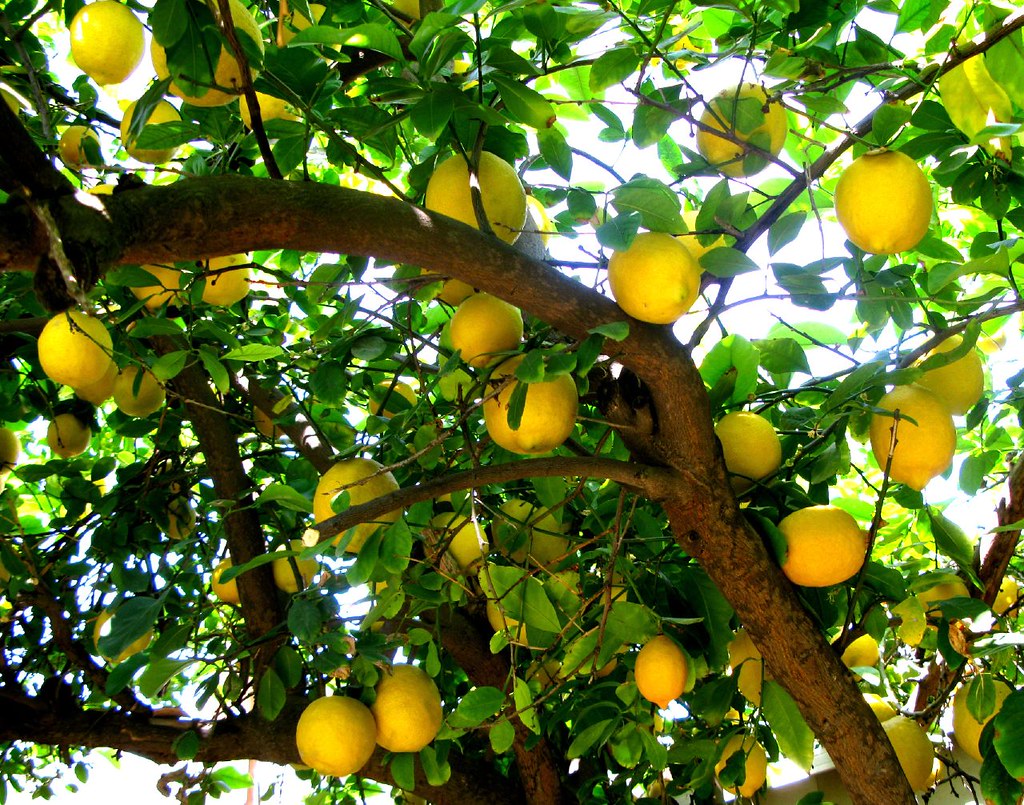

July 23rd is National Lemon Day! Having said that, the season for growing lemons is during the winter! So, how did we get here?Lemons are thought to be a cross between wild citron (a type of early lemon) and a semi-domesticated bitter orange. The lemon’s origin is not clear, but there are those who believe they originated in India and migrated with traders through what is now Southern Europe and then across the world.
The lemon made it to the United States in the 1700’s, and flourished in Florida, known for its Mediterranean-like climate. In 1984, Florida experienced a massive freeze, which killed many trees. Because of this “Big Freeze,” California growers took the opportunity to expand existing groves and took over as the US lemon producing leader.
Botanically, the lemon is a berry, or a hesperidium. They are segmented on the inside with juice and have a thick rind. They share their traits with other berries, including bananas and avocados.
Nutritionally, lemons have one of the highest amounts of vitamin C. According to the USDA, an average lemon has about 30 mg of vitamin C. This means one lemon has between 60-80% of the recommended daily intake of the vitamin for adults.
So, why are lemons considered a summer food? There does not seem to be a good reason for this in my internet search. However, because there are lemons that are evergreen trees that can produce fruit all year long, you can get lemons all year long!
In the end, we have this refreshing “berry” to enjoy all year round. Will you pay a little more for citrus fruits in the summer than in the winter? Probably. Is it worth it? Yup!